Buy low-cost.eu ?
We are moving the project
low-cost.eu .
Are you interested in purchasing the domain
low-cost.eu ?
domain@kv-gmbh.de · 0541-91531010
Buy low-cost.eu ?
What is the difference between potato starch and corn starch?
Potato starch is derived from potatoes, while corn starch is derived from corn. Potato starch has a slightly higher amylose content compared to corn starch, which can affect its thickening properties. Additionally, potato starch is often preferred for gluten-free recipes due to its neutral flavor, while corn starch can impart a slightly sweet taste. **
What is the difference between potato starch and potato flour?
Potato starch is a fine white powder that is extracted from the starch of potatoes. It is primarily used as a thickening agent in cooking and baking. Potato flour, on the other hand, is made from the whole potato, including the skin, and is a heavier, denser flour with a stronger potato flavor. It is often used in gluten-free baking to add moisture and texture to recipes. While both are derived from potatoes, they have different uses and properties in cooking and baking. **

Similar search terms for Salud-Viva-Potato-Starch
Top-Angebote
Products related to Salud-Viva-Potato-Starch:
-
Salud Viva Spirulina 125 grNutrition and Supplements Algae, Mushrooms and Medicinal Fungi Salud Viva Spirulina 125 gr Spirulina is a primitive single-celled algae, which has a spiral shape, hence its name. It is blue-green in colour due to the presence of Chlorophyll, which gives it a greenish tone, and Phycocyanin, a protein which gives it its bluish tone. It is a very suitable food for the human being, because of the great amount of essential nutrients it provides: proteins, vitamins, minerals, essential fatty acids and Chlorophyll. Spirulina is dried and converted into powder, through a process of evaporation that allows to preserve all its nutrients. Vegan, gluten free, lactose free, sugar free. Warning: May contain traces of HUSKENESS and SESAME FRUITS.5,94 £*Shipping: 3,99 £Secure redirect to the provider
-
Salud Viva Matcha 50 grNutrition and Supplements Natural Extracts Salud Viva Matcha 50 gr The manufacturing process of our Matcha begins with the raw material. The right place to grow the tea plants (Camellia sinensis), the soil and the climatic conditions play a key role in the final taste and nutritional value of the tea. We bring you the best Matcha from the regions of Uji-Kyoto, Aichi, Shizuoka. Regions that offer the perfect climate, high altitude and just the right amount of moisture needed to make this tea of unique quality. Thanks to its unique combination of phytonutrients, the caffeine in Matcha is assimilated in a very different and much healthier way than the caffeine in coffee, it is released into the bloodstream slowly as the catechins are broken down. The results are sustained energy for 4-6 hours. CONTAINS UP TO 147 TIMES MORE ANTI-OXIDANTS THAN REGULAR GREEN TEA! NUTRITIONAL INFORMATION (per 100 gr) Energy 1356 kj / 324 kcal. Fat 5,30 g. Saturated fats 0,68 g. Carbohydrates 38,50 g. of which sugars 0 g. Fiber 38,50 g. Protein 30,60 g. Salt .0,15 g. DETAILED NUTRITIONAL REPORT (per 100 g): Potassium 2700 mg...... (% VRN-135) Magnesium 230 mg......... (% VRN-61,3) Iron 17 mg...........(% VRN-121.43) Phosphorus .350 mg.........(% VRN-50) Copper 0.60 mg...........(% VRN-60) ß-caroten .29 mg....... Vitamin E 28,10 mg..........(% VRN-234,17) Thiamine 0.6 mg...........(% VRN-110) Riboflavin 1.35 mg...........(% VRN-96.42) Niacin 4 mg..........(% VRN-40) Vitamin B6 0.96 mg.......(% VRN-68.57) Folates .1200 mcg..........(% VRN-600) Vitamin C 60 mg.........(% VRN-75)8,70 £*Shipping: 3,99 £Secure redirect to the provider
-
Salud Viva Licorice 125 grNutrition and Supplements Natural Extracts Salud Viva Licorice 125 gr Licorice is a root, it is used as a flavoring and sweetener in the industry. Licorice powder (Glycyrrhiza glabra) is liquorice that has been dried and turned into powder, thus being an entirely natural ingredient. Licorice root is one of the most widely used medicinal herbs worldwide and the most widely used herb in Chinese medicine, and also in other cultures for its magnificent properties. It was used by the Egyptians. Large quantities of this root were found in King Tut's tomb for his journey to the afterlife. Dioscides, in his travels with Alexander the Great, recommended that his troops carry liquorice to resist the long marches, as well as for thirst in the dry areas. In the Middle Ages it was taken to alleviate the negative effects of very spicy or overcooked food. In a recent survey of phytotherapists, liquorice was classified as the most important herb used. A staggering number of Chinese herbal formulas (over 5,000) use licorice. Its first documented use dates back to the time of the great herbal China, about 190 AD, but it was certainly used many centuries earlier. Culinary uses: - Ideal in both sweet and savory preparations, such as licorice ice cream, licorice sweet bread, pumpkin biscuits, and also smoothies and shakes.4,12 £*Shipping: 3,99 £Secure redirect to the provider
-
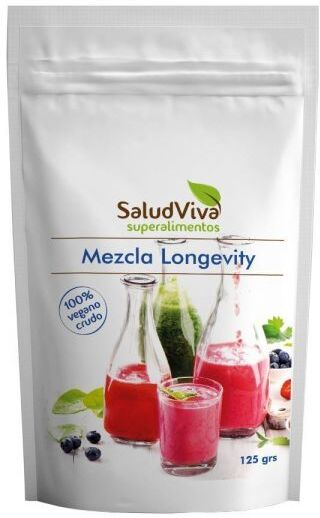
Salud Viva Longevity 125 grNutrition and Supplements Natural Extracts Salud Viva Longevity 125 gr This fruit mixture has been made from selected ingredients of the highest quality. This fruit mixture has been elaborated from selected ingredients of maximum quality. We always create mixtures trying to make them as healthy as possible and to act in synergy. Freeze-dried fruit powders perfectly preserve and safeguard nutrients such as phytonutrients in their natural state. HIGH CONTENT OF: Vit C, Vit E and COPPER SOURCE OF POTASSIUM AND MANGANESE. NUTRITIONAL INFORMATION (per 100 gr) Energy.928 kj / 221,5 kcal. Fats.2,134 g. of which saturated...0,94 g. Carbohydrates.52,30 g. of which sugars...14,40 g. Fiber.13,43 g. Proteins...3,78 g. Salt.0,056 g. Vit. C...31,14 mg. Vit. E .4,869 mg. Potassium..306,64 mg. Manganese ..0,51 mg. Copper ..0,40 mg.5,62 £*Shipping: 3,99 £Secure redirect to the provider


-
Is cornstarch the same as potato starch?
No, cornstarch and potato starch are not the same. They are both starches, but they come from different sources and have slightly different properties. Cornstarch is derived from corn, while potato starch is derived from potatoes. They can be used interchangeably in some recipes, but potato starch has a higher heat tolerance and is better for thickening sauces and gravies, while cornstarch is better for creating a crispy coating on fried foods. **
-
Can cornstarch be used instead of potato starch?
Yes, cornstarch can be used as a substitute for potato starch in most recipes. Both cornstarch and potato starch are used as thickening agents in cooking and baking, so they can often be used interchangeably. However, it's important to note that cornstarch has a slightly different texture and flavor compared to potato starch, so the final result may vary slightly. It's always best to use the recommended starch in a recipe, but in a pinch, cornstarch can be a suitable substitute for potato starch. **
-
What is cornstarch or potato starch used for?
Cornstarch and potato starch are commonly used as thickening agents in cooking and baking. They are added to soups, sauces, and gravies to help thicken and improve the texture of the dish. Additionally, they are often used in gluten-free baking as a substitute for wheat flour to help bind ingredients and create a lighter texture in baked goods. Both cornstarch and potato starch are versatile ingredients that can be used in a variety of recipes to achieve the desired consistency and texture. **
-
How does the starch get into the potato? (Biology)
Starch is produced in the leaves of the potato plant through photosynthesis, where sunlight is used to convert carbon dioxide and water into glucose. The glucose is then transported to the tubers (potatoes) through the phloem, which are specialized plant tissues for nutrient transport. Once in the tubers, the glucose is converted into starch and stored as an energy reserve for the plant. This process allows the potato plant to store energy for growth and reproduction. **
What is the reaction of H2O2 with potato starch?
When hydrogen peroxide (H2O2) comes in contact with potato starch, the enzyme catalase present in the potato catalyzes the breakdown of hydrogen peroxide into water and oxygen gas. This reaction is visible as bubbles of oxygen gas forming in the mixture. The starch acts as a stabilizer for the enzyme, allowing it to efficiently catalyze the decomposition of hydrogen peroxide. **
How does the transport of starch from the potato plant to the potato tuber work?
Starch is synthesized in the leaves of the potato plant through photosynthesis and is then transported to the potato tuber for storage and energy reserves. The process begins with the production of glucose in the leaves, which is then converted into starch. The starch is then broken down into smaller molecules and transported through the phloem, the plant's vascular tissue, to the tuber. Once in the tuber, the starch is stored as granules, providing the plant with a source of energy for growth and development. **
Top-Angebote
Products related to Salud-Viva-Potato-Starch:
-
Salud Viva Potato Starch 250 grNutrition and Supplements Flours Salud Viva Potato Starch 250 gr Potato starch, a fine, flavorless powder, with "excellent texture", gives greater viscosity than wheat or corn starches, and allows the production of very tasty products. It is used to thicken sauces and many other things, and as a binder in cake mixes, doughs, cookies, and ice cream. It is ideal for gluten-free recipes, suitable for celiacs and diabetics. Potato starch withstands higher temperatures than corn starch when used as a thickener.2,17 £*Shipping: 4,99 £Secure redirect to the provider
-
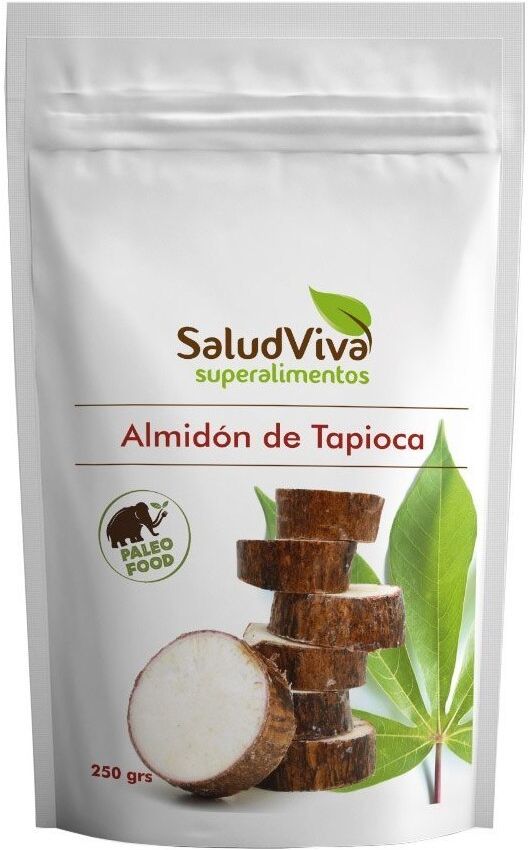
Salud Viva Tapioca starch 250 grNutrition and Supplements Nuts and Seeds Salud Viva Tapioca starch 250 gr This starch is made from the root of the cassava, the result is a fine white powder similar to corn starch. Cassava provides elasticity to doughs, helps add body to gluten-free dough recipes, and in many cases provides that crisp and airy texture characteristic of real bread. * It is also used to thicken liquids, puddings, sweets, sauces, etc. It can be used to prepare a creamy custard and for your dairy-free ice creams. * Two large molecules made of simple sugars, called amylose and amylopectin, make starch the perfect ingredient in many recipes due to its adhesive property, the same property that makes bread and cakes fluffy. * The cassava root has more starch than other tubers, hence its great potential as a substitute for wheat. * With cassava starch it is not necessary to add yeast to obtain the sticky structure typical of foods made with wheat. It is used as an absorbent and water binding agent.1,84 £*Shipping: 3,99 £Secure redirect to the provider
-
Salud Viva Spirulina 125 grNutrition and Supplements Algae, Mushrooms and Medicinal Fungi Salud Viva Spirulina 125 gr Spirulina is a primitive single-celled algae, which has a spiral shape, hence its name. It is blue-green in colour due to the presence of Chlorophyll, which gives it a greenish tone, and Phycocyanin, a protein which gives it its bluish tone. It is a very suitable food for the human being, because of the great amount of essential nutrients it provides: proteins, vitamins, minerals, essential fatty acids and Chlorophyll. Spirulina is dried and converted into powder, through a process of evaporation that allows to preserve all its nutrients. Vegan, gluten free, lactose free, sugar free. Warning: May contain traces of HUSKENESS and SESAME FRUITS.5,94 £*Shipping: 3,99 £Secure redirect to the provider
-
Salud Viva Matcha 50 grNutrition and Supplements Natural Extracts Salud Viva Matcha 50 gr The manufacturing process of our Matcha begins with the raw material. The right place to grow the tea plants (Camellia sinensis), the soil and the climatic conditions play a key role in the final taste and nutritional value of the tea. We bring you the best Matcha from the regions of Uji-Kyoto, Aichi, Shizuoka. Regions that offer the perfect climate, high altitude and just the right amount of moisture needed to make this tea of unique quality. Thanks to its unique combination of phytonutrients, the caffeine in Matcha is assimilated in a very different and much healthier way than the caffeine in coffee, it is released into the bloodstream slowly as the catechins are broken down. The results are sustained energy for 4-6 hours. CONTAINS UP TO 147 TIMES MORE ANTI-OXIDANTS THAN REGULAR GREEN TEA! NUTRITIONAL INFORMATION (per 100 gr) Energy 1356 kj / 324 kcal. Fat 5,30 g. Saturated fats 0,68 g. Carbohydrates 38,50 g. of which sugars 0 g. Fiber 38,50 g. Protein 30,60 g. Salt .0,15 g. DETAILED NUTRITIONAL REPORT (per 100 g): Potassium 2700 mg...... (% VRN-135) Magnesium 230 mg......... (% VRN-61,3) Iron 17 mg...........(% VRN-121.43) Phosphorus .350 mg.........(% VRN-50) Copper 0.60 mg...........(% VRN-60) ß-caroten .29 mg....... Vitamin E 28,10 mg..........(% VRN-234,17) Thiamine 0.6 mg...........(% VRN-110) Riboflavin 1.35 mg...........(% VRN-96.42) Niacin 4 mg..........(% VRN-40) Vitamin B6 0.96 mg.......(% VRN-68.57) Folates .1200 mcg..........(% VRN-600) Vitamin C 60 mg.........(% VRN-75)8,70 £*Shipping: 3,99 £Secure redirect to the provider
-
What is the difference between potato starch and corn starch?
Potato starch is derived from potatoes, while corn starch is derived from corn. Potato starch has a slightly higher amylose content compared to corn starch, which can affect its thickening properties. Additionally, potato starch is often preferred for gluten-free recipes due to its neutral flavor, while corn starch can impart a slightly sweet taste. **
-
What is the difference between potato starch and potato flour?
Potato starch is a fine white powder that is extracted from the starch of potatoes. It is primarily used as a thickening agent in cooking and baking. Potato flour, on the other hand, is made from the whole potato, including the skin, and is a heavier, denser flour with a stronger potato flavor. It is often used in gluten-free baking to add moisture and texture to recipes. While both are derived from potatoes, they have different uses and properties in cooking and baking. **
-
Is cornstarch the same as potato starch?
No, cornstarch and potato starch are not the same. They are both starches, but they come from different sources and have slightly different properties. Cornstarch is derived from corn, while potato starch is derived from potatoes. They can be used interchangeably in some recipes, but potato starch has a higher heat tolerance and is better for thickening sauces and gravies, while cornstarch is better for creating a crispy coating on fried foods. **
-
Can cornstarch be used instead of potato starch?
Yes, cornstarch can be used as a substitute for potato starch in most recipes. Both cornstarch and potato starch are used as thickening agents in cooking and baking, so they can often be used interchangeably. However, it's important to note that cornstarch has a slightly different texture and flavor compared to potato starch, so the final result may vary slightly. It's always best to use the recommended starch in a recipe, but in a pinch, cornstarch can be a suitable substitute for potato starch. **
Similar search terms for Salud-Viva-Potato-Starch
-
Salud Viva Licorice 125 grNutrition and Supplements Natural Extracts Salud Viva Licorice 125 gr Licorice is a root, it is used as a flavoring and sweetener in the industry. Licorice powder (Glycyrrhiza glabra) is liquorice that has been dried and turned into powder, thus being an entirely natural ingredient. Licorice root is one of the most widely used medicinal herbs worldwide and the most widely used herb in Chinese medicine, and also in other cultures for its magnificent properties. It was used by the Egyptians. Large quantities of this root were found in King Tut's tomb for his journey to the afterlife. Dioscides, in his travels with Alexander the Great, recommended that his troops carry liquorice to resist the long marches, as well as for thirst in the dry areas. In the Middle Ages it was taken to alleviate the negative effects of very spicy or overcooked food. In a recent survey of phytotherapists, liquorice was classified as the most important herb used. A staggering number of Chinese herbal formulas (over 5,000) use licorice. Its first documented use dates back to the time of the great herbal China, about 190 AD, but it was certainly used many centuries earlier. Culinary uses: - Ideal in both sweet and savory preparations, such as licorice ice cream, licorice sweet bread, pumpkin biscuits, and also smoothies and shakes.4,12 £*Shipping: 3,99 £Secure redirect to the provider
-
Salud Viva Longevity 125 grNutrition and Supplements Natural Extracts Salud Viva Longevity 125 gr This fruit mixture has been made from selected ingredients of the highest quality. This fruit mixture has been elaborated from selected ingredients of maximum quality. We always create mixtures trying to make them as healthy as possible and to act in synergy. Freeze-dried fruit powders perfectly preserve and safeguard nutrients such as phytonutrients in their natural state. HIGH CONTENT OF: Vit C, Vit E and COPPER SOURCE OF POTASSIUM AND MANGANESE. NUTRITIONAL INFORMATION (per 100 gr) Energy.928 kj / 221,5 kcal. Fats.2,134 g. of which saturated...0,94 g. Carbohydrates.52,30 g. of which sugars...14,40 g. Fiber.13,43 g. Proteins...3,78 g. Salt.0,056 g. Vit. C...31,14 mg. Vit. E .4,869 mg. Potassium..306,64 mg. Manganese ..0,51 mg. Copper ..0,40 mg.5,62 £*Shipping: 3,99 £Secure redirect to the provider
-
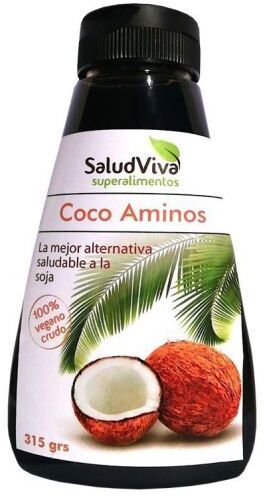
Salud Viva Cocoaminos 315 grNutrition and Supplements Sweeteners Salud Viva Cocoaminos 315 gr Coco Aminos, is a delicious sauce made from the fermentation of sap from the coconut flower. It is dark, rich, salty and slightly sweet in taste. It resembles a light soy sauce or tamari (soy sauce without wheat), but is soy and gluten free, making it the perfect substitute for those who avoid soy and gluten. To make coconut amino acids, the sap is collected from coconut flowers, then mixed with sea salt and allowed to age and ferment for a long time. Also, coconut amino acids have about 65% less sodium than regular soy sauce. And just to make it even better: Coconut aminos has a host of health benefits! Coming from Indonesia from small farmers and gatherers, it is especially unique, unlike other Coco aminos, this one is not so salty, it is a true delacatessen of its kind, incomparable in taste. Source of Calcium and Potassium and high content of Chloride.5,96 £*Shipping: 3,99 £Secure redirect to the provider
-
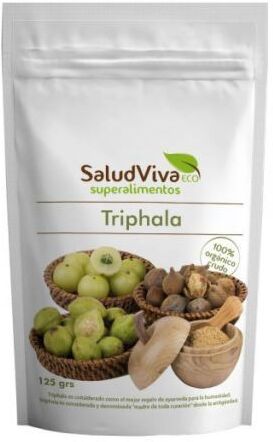
Salud Viva Triphala 125 grNutrition and Supplements Natural Extracts Salud Viva Triphala 125 gr In all ancient Ayurvedic treatises Triphala is mentioned as a powerful blood purifier, toner and gentle laxative, much appreciated for its ability to regulate the processes of digestion and elimination, detoxify the liver and cleanse the colon. Warning: - May contain traces of SHELLFRUITS and SESAME.5,89 £*Shipping: 3,99 £Secure redirect to the provider
-
What is cornstarch or potato starch used for?
Cornstarch and potato starch are commonly used as thickening agents in cooking and baking. They are added to soups, sauces, and gravies to help thicken and improve the texture of the dish. Additionally, they are often used in gluten-free baking as a substitute for wheat flour to help bind ingredients and create a lighter texture in baked goods. Both cornstarch and potato starch are versatile ingredients that can be used in a variety of recipes to achieve the desired consistency and texture. **
-
How does the starch get into the potato? (Biology)
Starch is produced in the leaves of the potato plant through photosynthesis, where sunlight is used to convert carbon dioxide and water into glucose. The glucose is then transported to the tubers (potatoes) through the phloem, which are specialized plant tissues for nutrient transport. Once in the tubers, the glucose is converted into starch and stored as an energy reserve for the plant. This process allows the potato plant to store energy for growth and reproduction. **
-
What is the reaction of H2O2 with potato starch?
When hydrogen peroxide (H2O2) comes in contact with potato starch, the enzyme catalase present in the potato catalyzes the breakdown of hydrogen peroxide into water and oxygen gas. This reaction is visible as bubbles of oxygen gas forming in the mixture. The starch acts as a stabilizer for the enzyme, allowing it to efficiently catalyze the decomposition of hydrogen peroxide. **
-
How does the transport of starch from the potato plant to the potato tuber work?
Starch is synthesized in the leaves of the potato plant through photosynthesis and is then transported to the potato tuber for storage and energy reserves. The process begins with the production of glucose in the leaves, which is then converted into starch. The starch is then broken down into smaller molecules and transported through the phloem, the plant's vascular tissue, to the tuber. Once in the tuber, the starch is stored as granules, providing the plant with a source of energy for growth and development. **
* All prices are inclusive of VAT and, if applicable, plus shipping costs. The offer information is based on the details provided by the respective shop and is updated through automated processes. Real-time updates do not occur, so deviations can occur in individual cases. ** Note: Parts of this content were created by AI.